
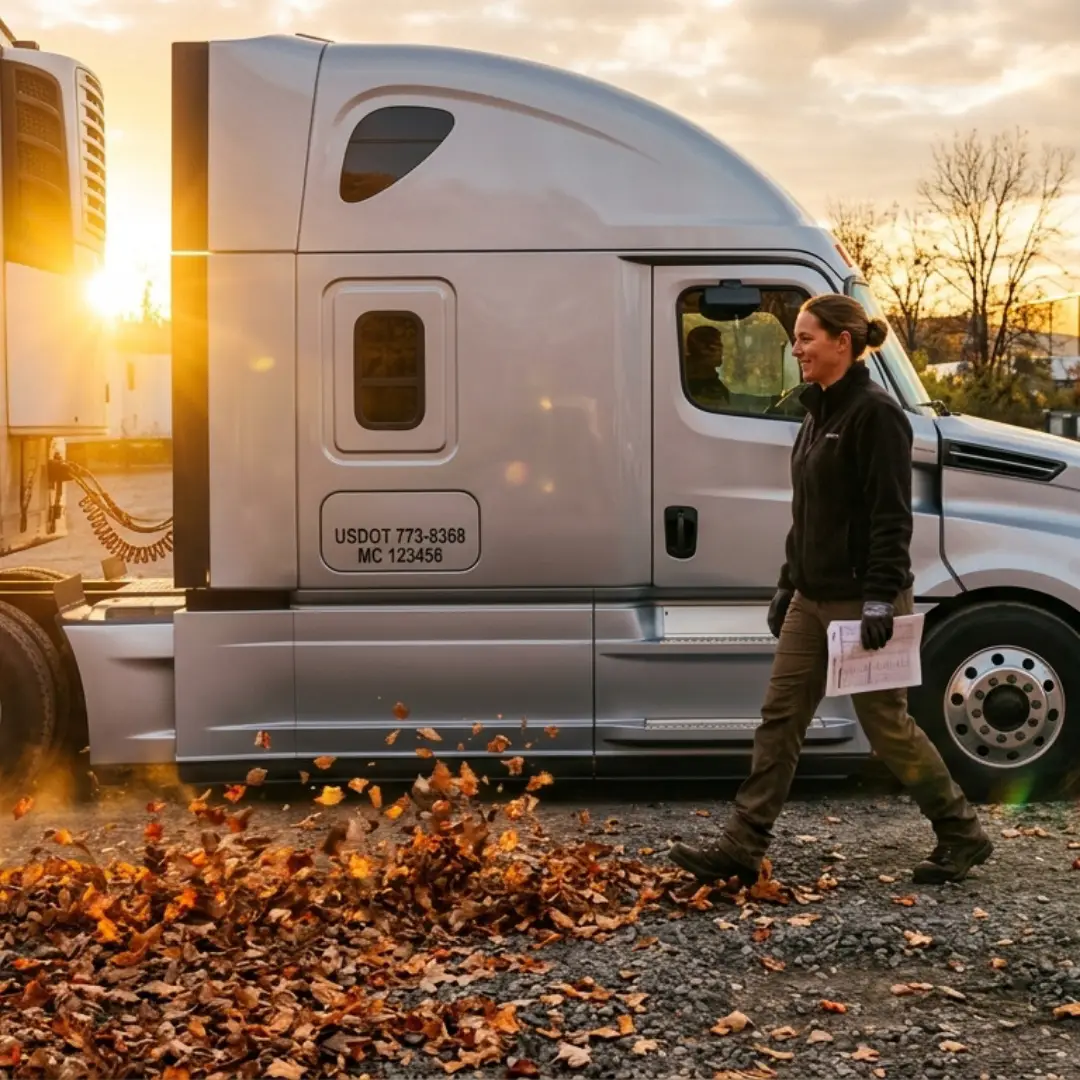
How Should Fleets Prepare For Fall?
For me, with temperatures in the 100s here in Texas, it’s easy not to think about the weather changes rapidly approaching. When you’re sweating through your shirt just walking to the truck, it’s hard to think about preparing for fall.
But Fall doesn’t typically like to ease in; one week your whole fleet is running the AC, and the next you’ve got drivers staring down an early snow nobody planned for. In order to stay on top of schedules, it’s critical to start preparing now.
Here’s what I’d be looking at right now if I were still running a terminal.
1. Prep Tires For Fall
Temperature swings this time of year are rougher on tires than most people give them credit for. A 30- or 40-degree swing between a morning start and an afternoon run changes tire pressure, whether you’re watching for it or not. Get your drivers in the habit of checking tires more often as those swings kick in, not just during pre-trips, but as part of their regular routine.
If you’ve got drivers in the northern states or mountains, prepare for snow early in the season. Make sure drivers are checking tread on drive tires so trucks have adequate tread for the challenges of cold weather. Verify that trucks have tire chains for areas that are restricted or where heavy snow is projected.
2. Beat The First Freeze
Diesel starts to gel around 14°F, the cloud point, where the wax naturally in the fuel starts forming crystals that clog filters. Educate drivers on the signs of fuel gelling to help them prevent potential breakdowns. Order your diesel additives now to avoid long waits from high demand, and order extra fuel filters while you’re at it. That way, when gelling does occur, you can swap a filter on the spot rather than waiting on a parts order.
I also recommend educating drivers and technicians on the signs of DEF crystallization. White, chalky buildup around the fill neck, injector tips, or sensors is usually a sign DEF has been sitting too long, stored wrong, or exposed to more heat than it should’ve been. Get your drivers and techs looking for it now so they can avoid unexpected derates.
Cold weather is hard on batteries and results in a lot of expensive no-starts for fleets. One reason I like Idle Smart is its ability to prevent battery or cold-start issues, reducing the risk of drivers being sidelined by a dead battery or fuel gelling.
3. Prepare Drivers For Hidden Fall Hazards
Wildfire smoke, fog, and other reduced visibility can impact drivers on the road. Make sure they scan the road far enough ahead to be prepared to reduce speed or stop before issues occur.
If you’ve got trucks parking anywhere near active wildfire regions, make sure drivers are scanning the area for alerts before they settle in for the night. Fire patterns shift fast, so it’s important to keep an eye out for alerts in the event that they need to relocate.
I’d also make sure your drivers aren’t relying too heavily on sensors (collision mitigation, blind spot warning, etc.) as weather gets colder and snowier. It’s great technology, but ice buildup can impact its effectiveness.
4. Be Ready For Deer Season
Fall is deer season: State Farm’s claims data shows October, November, and December account for 41% of all animal collision claims in a given year, and deer make up roughly two out of every three.
Educate your drivers on peak migration patterns so they know where activity tends to spike, and flag any routes that have been impacted by deer strikes. Encourage them to pay attention to roadside evidence, and educate drivers on your company’s approach to responding to a deer that suddenly appears in their lane. Drivers need to be prepared so they don’t overcorrect and lose control of their vehicle while trying to avoid a deer.
5. Avoid The Surge In Battery Failures
Cold weather causes voltages to drop, and parasitic loads start mattering a lot more once temperatures fall. Batteries’ starting capabilities can drop by 35% at 32 degrees. At 0 degrees, they can lose up to 60% of their original capacity, making them work that much harder to crank in cold climates.
Make sure you adjust settings with any idle-reduction tech so that you are accounting for cold weather. You will want your tech to engage earlier than your summer settings to account for the voltage drop. Idle Smart allows you to adjust the settings and have them update over the air so you don’t need to bring every truck in to make adjustments.
6. Complete Preventative Maintenance Before Volumes Increase
Harvest season, holiday inventory buildup, and the rate volatility that tends to accompany them start to stack up in the Fall. Start bringing equipment in now for preventative maintenance to prep for cold weather and get ahead of the inevitable volume increases.
Getting Your Fleet Ready For Fall Pays Off
Fall prep isn’t glamorous, but it makes the difference between a smooth season and one full of unexpected breakdowns and no-starts.
Wishing you and your drivers safe travels this season.
Want to see how Idle Smart can help your fleet avoid dead batteries and fuel gelling?