

Summer Is Hard on Batteries, Too
Most fleet maintenance calendars treat summer as a coolant-and-tires season. Check the radiator. Inspect the belts and hoses. Maybe bump up tire pressure checks.
While cold weather gets most of the blame for no-starts, extreme heat accelerates battery discharge, corrodes internal components, and leaves your trucks stranded when you need them most.
A dead battery on a daycab truck doesn’t just delay one driver; it disrupts your entire operation. Unlike sleeper cabs that face overnight hotel loads, daycabs encounter a different set of battery challenges during regional routes, warehouse waits, and yard time.
Why Do Batteries Still Fail in Summer?
Heat accelerates the chemical reactions inside lead-acid batteries. While this temporarily improves starting power, it also speeds up internal corrosion, water loss, and plate degradation.
According to Heavy Duty Trucking, constant exposure to temperatures above 77°F cuts battery life in half for every 15-degree rise. Now factor in where the battery box actually lives on a modern, aerodynamic Class 8 truck. Battery boxes are closer to heat-generating components, with less ventilation than in older truck generations. Internal battery temperatures can exceed 140°F on a hot summer afternoon.
Daycab drivers go home at the end of their shift, but the electronics on that truck don’t.
Modern daycabs run ELDs, telematics units, dash cameras, GPS systems, and liftgate controls continuously. Each draws a small current when the truck is parked. A few milliamps here, a few milliamps there — it sounds trivial, but it still causes battery drain. These parasitic loads slowly push the battery into a discharge state that, in summer heat, accelerates the degradation already underway.
Short duty cycles make the problem worse. A truck running regional stops may not give the alternator enough sustained runtime to fully recharge the battery between cycles. The battery operates chronically undercharged.
What a No-Start Actually Costs
The cost of a new battery shows up on an invoice, but the rest of the costs from the downtime usually don’t.
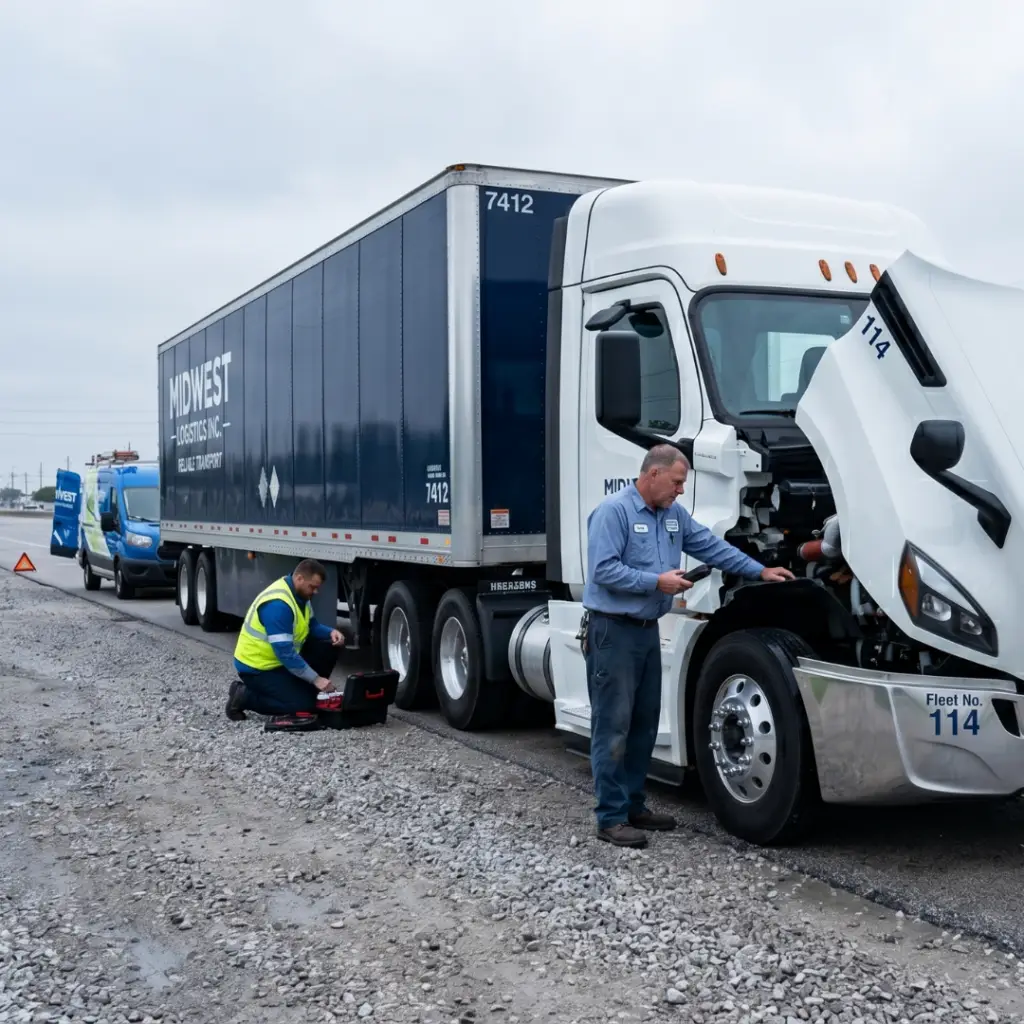
When a daycab won’t start, the losses stack fast: driver downtime waiting on a service truck, dispatcher time rerouting freight, technician time pulled from scheduled work to respond to an emergency, and potential cargo impact if the load is time-sensitive. In a regional operation running tight delivery windows, one no-start at the wrong time can throw off an entire day’s dispatch plan.
Those costs compound when no-start events become a pattern, and for fleets not actively managing battery health through summer, they do. Additionally, there’s battery degradation. Every deep discharge below 12.0V permanently reduces a lead-acid battery’s usable capacity. Batteries are replaced faster and more often, for reasons that were entirely preventable.
The industry average for a no-start event from the service call and driver downtime to the missed delivery window runs around $800. For some fleets, it’s closer to $1,400 when you factor in customer impact.
The deeper cost is the harm repeated deep discharges do to battery life. Lead-acid batteries that cycle below 12.0V regularly lose capacity permanently. You end up replacing batteries on a compressed schedule and never making the connection between the no-starts and what was happening to those batteries between PM intervals.
How Fleets Protect Batteries In the Heat
There’s no shortage of approaches to this problem. Most fleets use some combination of the following:
Battery specification upgrades. Absorbed Glass Mat (AGM) batteries outperform standard flooded lead-acid batteries in cycled applications, with better vibration resistance, deeper discharge tolerance, and more reliable performance under parasitic load conditions. Thin Plate Pure Lead (TPPL) AGM batteries go further, with more plate surface area and better cranking performance in heat. The tradeoff is cost and charger compatibility: AGM batteries require AGM-compatible shop chargers. Use the wrong charger, and you create a new failure mode. Flooded lead-acid remains common on daycabs because it’s cheaper upfront and the duty cycle looks simple on paper, but regional routes often carry more parasitic load and shallower charging cycles than that assumption accounts for.
Proactive replacement schedules. Some maintenance consultants now advise replacing all batteries at the 24-month mark during scheduled PM, regardless of test results. It removes the guesswork and reduces emergency response costs. It also means replacing batteries that may still have usable life, which is a cost worth evaluating against your no-start frequency.
Parasitic load audits. Identifying what draws power when the truck is parked is a low-cost, high-value step. ELDs, telematics, and dash cameras are the most common culprits on modern daycabs. Aftermarket electronics that weren’t installed cleanly are also frequent offenders. Master kill switches work well for trucks with extended parking windows, though they add a step for drivers and don’t help trucks that park overnight every day.
Integrating battery testing into every PM. A voltage check tells you the battery is charged, but it doesn’t tell you whether the battery can still hold a charge and deliver it under load. A smart analyzer does both. Run it at every PM, and you’ll see batteries declining long before they fail on the road.
Automatic battery protection. Some engine management systems monitor battery voltage in real time and cut power to non-essential loads before the battery drops to a damaging level, without requiring driver action. Certain systems can start the engine on weekends or at night when the weather affects battery voltage, recharging the batteries before they die and leave a driver with a no-start in the morning. Some fleets have reduced the burden on their shop team with this technology, because they no longer have to send someone out to start trucks at 3 am.
Most fleets don’t rely on any single approach. They match battery technology to their actual duty cycle, stay ahead of parasitic load creep as new electronics get added to the fleet, and build testing into the PM process so battery health is never a guess.
Choosing the Right Approach for Your Operation
Before evaluating any solution, map your actual exposure. Where do your trucks park overnight? How long do they sit at customer locations? What’s your average duty cycle length, and is it long enough for the alternator to fully recharge the battery between stops?
As you evaluate options, start with these four questions:
- Does it require behavior change from drivers or dispatch? Solutions that depend on drivers unplugging devices, hitting kill switches, or following new protocols see inconsistent results in the field. The less friction, the more reliably it works across your entire fleet.
- Does it add to your maintenance team’s workload? Any system that requires regular calibration, dedicated battery maintenance, or additional inspection steps competes with the time your technicians already don’t have. Know the ongoing labor cost before committing.
- Does it address the cause or the symptom? Battery replacement and roadside response manage the outcome. Parasitic load control, proactive testing, and idle management address what’s actually driving the failure. A complete approach does both — but knowing which problem you’re solving helps you prioritize spending.
- Will your team actually use it? The best battery protection strategy is the one that gets executed consistently across every truck, every week. A solution that adds steps to your PM process or depends on drivers following new protocols will see inconsistent results in the field. Evaluate not just whether it works in ideal conditions, but whether it holds up in a real shop with real workloads, and consider what your team can do to encourage adoption.
Batteries don’t get enough attention in summer, but the good news is that summer battery damage is preventable. The right battery spec, a parasitic load audit, and testing built into every PM will catch most of what the heat throws at your fleet before it becomes a no-start.
Talk to our team today about automatically protecting your fleet from no-starts.